
Environment
Aquatic invasive species prevention
Hennepin County receives funding from the State of Minnesota to manage the spread of aquatic invasive species (AIS), such as zebra mussels, Eurasian watermilfoil, carp and other species.
Funding is available to help local units of government, nonprofit organizations, or other public entities and institutions supplement existing watercraft inspection programs or establish new programs. Funding is also available to help local units of government and organizations implement projects that prevent the spread of aquatic invasive species. Learn more about aquatic invasive species prevention grants.
Take the pledge to prevent AIS
Celebrate all the activities we enjoy in and around Hennepin County lakes while protecting them from aquatic invasive species (AIS). AIS can cause irreparable damage to native fish and plant populations and affect our health, recreation, property values, and the economy.
Join Lake Pledge to learn what you can do to help prevent the spread of AIS in Hennepin County lakes.
The program:
- Is family friendly
- Will help you learn how activities may unintentionally introduce AIS
- Includes short entertaining videos showing Hennepin County lake users taking action to prevent AIS
- Takes just minutes each week to participate
Join Lake Pledge today
Join on the Lake Pledge website
When you register: select the Hennepin County lake you use most often. When prompted to select the ways that you enjoy time on the water (sailing, fishing, kayaking, etc.) choose everything that applies to any lake in the county.
Youth AIS education resources
Video for 4th and 5th grade youth
Hennepin County has created a short video (3 minutes) to help 4th and 5th graders learn more about AIS. Content includes an introduction to what AIS means, an overview of the risk in the environment, common AIS found in stores, and information on what to do with unwanted pets. Please share with partners and educators that work with youth in 4th or 5th grade.
Interactive display available to borrow
A portable interactive display is available to help spread the message about preventing the introduction of aquatic invasive species throughout Hennepin County. Display creation was funded through a Hennepin County aquatic invasive species prevention grant. The display features realistic models with a landscape containing boats and buildings as representations of pathways of aquatic invasive species, including lesser-known sources such as garden centers and pet stores.
To borrow the display or get details to create your own, contact Tony Brough at tony.brough@hennepin.us.
Pet store and garden center AIS prevention
Aquatic Invasive Species (AIS) infestations can occur as a result of the accidental release of water garden plants and animals. Introducing animals and plants from your business into the ecosystems in Minnesota can cause harm to our lakes, streams and wetlands.
The following training and resources will teach you how pet stores and garden centers can introduce AIS and what staff can do to prevent it. Join pet stores and garden centers by committing to protect Minnesota waters from AIS.
Take a short training
Watch this four-minute video training and take the short quiz to earn your AIS prevention course certificate of completion. This video is intended for store owners, managers, and staff at garden centers and pet stores.
Take the quiz and pledge to prevent the spread of AIS. You will receive a certificate upon completion.
AIS disposal guidelines
Garden center and nursery disposal guidelines for water garden plants and animals
Garden center disposal guidelines (PDF, 2MB)
- Inspect and rinse new water garden plants to rid them of seeds, plant fragments, snails and small animals. Rinse into sink, on a vegetated area, or into container where water can’t drain to storm sewers. Strain out any sediment, plant fragments and small animals and seal in a plastic bag, freeze for 24 hours and dispose of in the trash.
- Make sure that display water gardens are isolated from natural waterways, wetlands and areas that flood.
- Drain water in the sink through a strainer or on dry land where water can’t flow to storm drains, ditches, wetlands, streams, or other surface waters when cleaning or emptying display water gardens and aquatic plant containers.
- Over-winter plants for next season if possible.
- Freeze unwanted plants for 24 hours in a sealed plastic bag, or heat in a microwave and then dispose in trash. Composting should be avoided, as seeds and fragments may still grow.
- Dispose of nonviable prohibited invasive species and aquatic plants at a legal site at least 300 feet from any water body or seasonally flooded land.
- Provide information to your customers on proper disposal of unwanted plants.
Pet store disposal guidelines for aquatic plants and animals
Pet store disposal guidelines (PDF, 1MB)
- Filter out plant fragments, snails, eggs or other small living species from aquarium water using a strainer or small mesh net before disposing of water down the drain.
- Prevent plants and plant parts, seeds, animals and aquarium or rinse water, from reaching storm drains.
- Inspect and rinse new aquatic plants into a sink with a strainer, to rid them of seeds, fragments, snails and fish.
- Freeze unwanted plants for 24 hours in a plastic bag, or heat in a microwave and then place in the trash. Composting should be avoided, as seeds and fragments may still grow.
- Make sure plants and animals cannot escape or are not released into the environment.
- Provide information to your customers on proper disposal of unwanted plants and animals.
- Follow guidelines for humanely euthanizing unwanted live fish and animals. Guidelines are available through the American Veterinary Medical Association. Disposal of live organisms should be considered as the last resort.
Resources for pet and garden stores
Print and post these resources in your store or workplace for employee reference.
- Prevention tips for garden center and pet store staff (PDF, 1MB)
- Invasive plants and animals in pet stores poster (PDF, 1MB)
- Invasive plants and animals in garden stores poster (PDF, 1MB)
Sign up for the Responsible Buyers email list from the Minnesota Department of Natural Resources to stay up to date on new information.
Reference materials
- Trade pathways for invasive species. Information from the Minnesota DNR on AIS specific to pet stores, the horticultural industry, and other businesses.
- Prohibited and regulated invasive species list. The most up-to-date list of prohibited and regulated invasive species and invasive species laws from the Minnesota DNR.
- Invasive species information sheets from the Midwest Invasive Species Information Network.
- Auctions and take-back programs from the Minnesota Aquarium Society.
- Goldfish and Koi rescue and sales events from the Minnesota Water Garden Society
Public water access redesign
Public accesses redesign for improved AIS compliance rates
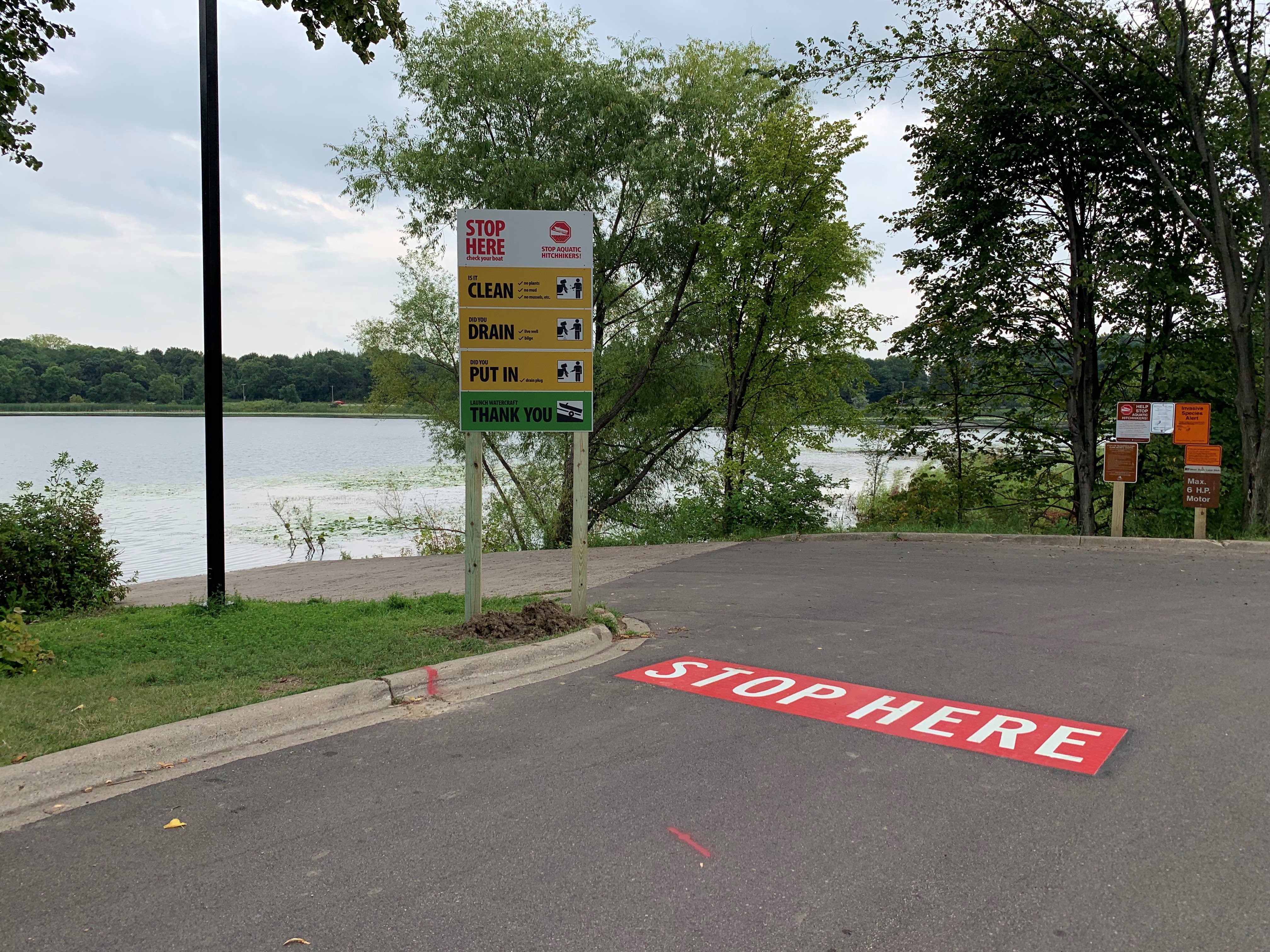
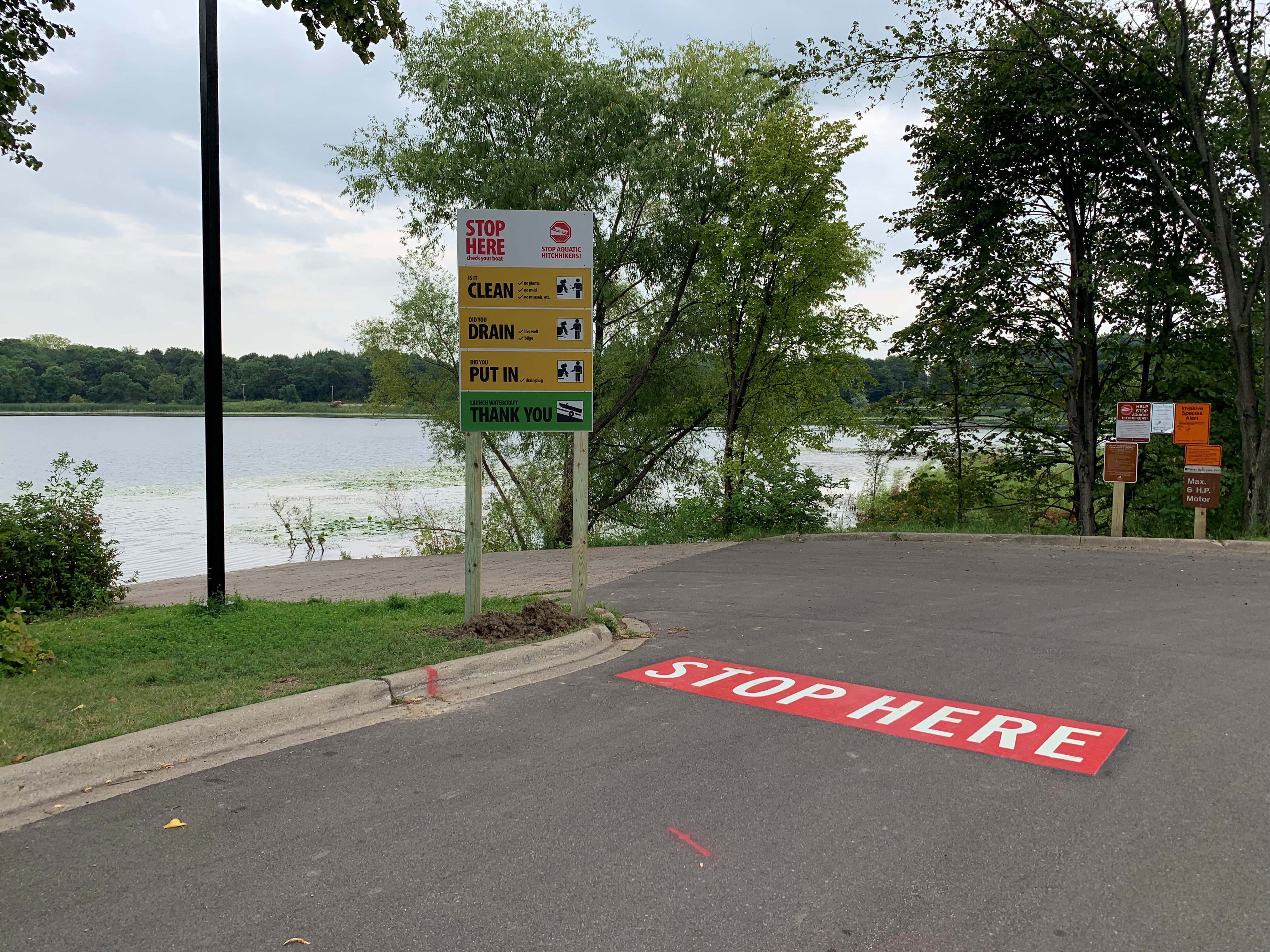
In 2012, the county piloted a project to re-design the North Arm public access on Lake Minnetonka using strategies grounded in behavior change psychology for AIS prevention actions. At the conclusion of the 2023 season, 21 county accesses have now implemented at least one behavior change strategy. Work with these 21 accesses includes partnering with 15 different access administrators.
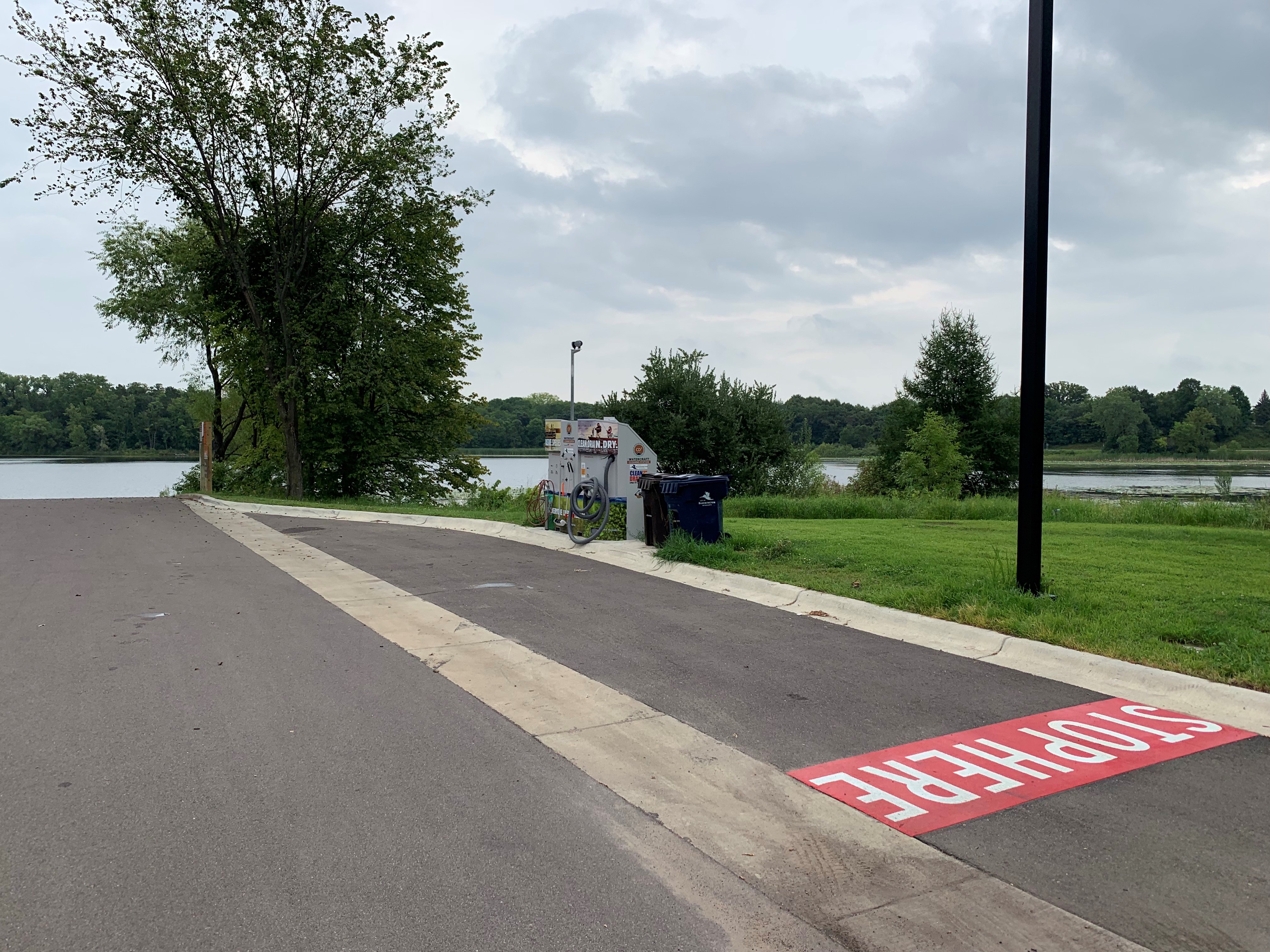
The county’s behavior change strategies at water accesses include:
- CD3 waterless cleaning system, which provides the tools to facilitate the actions.
- Pavement markings to influence traffic flow.
- Designated locations to take AIS prevention measures.
- Signs to prompt the desired behaviors.
Key takeaways from this work include improved compliance rates and self-inspection rates and that these strategies can be a cost-effective way to help prevent the spread of AIS.
This work can often be accomplished in partnership with county staff. If you interested in discussing how behavior change strategies could be incorporated into your access, contact Tony Brough at 612-348-4378.
Reports and studies
AIS prevention aid guidelines
Hennepin County has finalized updates to aquatic invasive species (AIS) prevention aid guidelines for a five-year period beginning in 2026. The guidelines help direct how the county spends state funding to work on preventing the introduction or limiting the spread of AIS.
Aquatic Invasive Species prevention aid guidelines 2026 - 2030 (PDF, 1MB)
Continuing great work in AIS prevention
The updated guidelines continue much of the great work Hennepin County and partners accomplished from 2020 to 2025, including passing most state AIS Prevention Aid funding directly to local partners to support:
- Watercraft inspection programs
- Early detection efforts
- Redesigns and enhancements of public water accesses to encourage people to take AIS prevention actions
- Education of boaters, lakeshore homeowners, and residents about AIS prevention.
The county will continue to support rapid response to new AIS infestations and offer technical assistance to identify and address AIS found in our local lakes.
Updates to guidelines
Updates to the 2026-2030 guidelines compared to previous county guidelines include:
- New grant program for watercraft inspections: We’re launching a standalone grant to supplement existing inspection programs and help start new ones with priority given to non-taxing authorities.
- More collaboration with AIS partners: Hennepin County will schedule a working group meeting in late winter to review recent program results and set priorities for AIS prevention in 2026-2027.
- Stronger advocacy at the state level: Hennepin County will push to maintain AIS Prevention Aid funding for counties and encourage stronger statewide interventions.
Stakeholder engagement in guideline development
The county asked stakeholders for input to develop the new guidelines. As part of this effort, 161 people provided feedback through surveys and focus groups. Participants included youth, water users, subscribers of the county’s AIS early detection volunteer newsletter, and people actively working on or connected to AIS prevention efforts in Hennepin County. They represented cities, local government agencies, nonprofit organizations, nearby counties, Hennepin County, private businesses, state agencies, universities, and lake associations. The following is a summary of what we heard during the engagement efforts.
Summary of key findings from engagement efforts
- Broad support for Hennepin County’s current AIS prevention programming, recognizing its effectiveness, innovation, and strong partnerships.
- Stakeholders encouraged continued collaboration with other counties, universities, and underrepresented communities.
- Seek further advocacy and increased support for resources to improve AIS prevention efforts countywide.
- Continued emphasis on maintaining a comprehensive funding approach, with flexibility to adapt if state funding is reduced.
- Prioritize watercraft inspections
- Support for grants to partners
- Enhance transparency in how decisions are made and how funds are spent to maximize AIS prevention work
The county then shared a draft of the guidelines with 2,477 stakeholders and provided a survey and an online meeting to give feedback. The county received 13 survey responses, and five people attended the meeting to provide final comments.
Aquatic invasive species guidelines draft feedback summary (PDF, 1MB)
Accomplishments report
The accomplishments report highlights how Hennepin County is using the state funding and the results of the projects we support.
2025 AIS prevention program accomplishments report (PDF, 6MB)
Watercraft inspection programs
Watercraft inspectors/ambassadors provide a one-on-one interaction with those using our county lakes. Through the 2025 guidelines, $100,000 was contracted to expand existing countywide watercraft inspection programs. Two pass-through grants were also awarded. Below are the 2025 reports.
Get email updates
Subscribe to the Aquatic Invasive Species early detection volunteer newsletter.
Update your subscriber preferences